

Debbie Berry
Publication Date: July 14, 2026
Urban LAND (link to original article)
Cleveland’s Midline project pioneers a new district-scale model to transform vacant industrial brownfields into hubs for advanced manufacturing and good jobs.
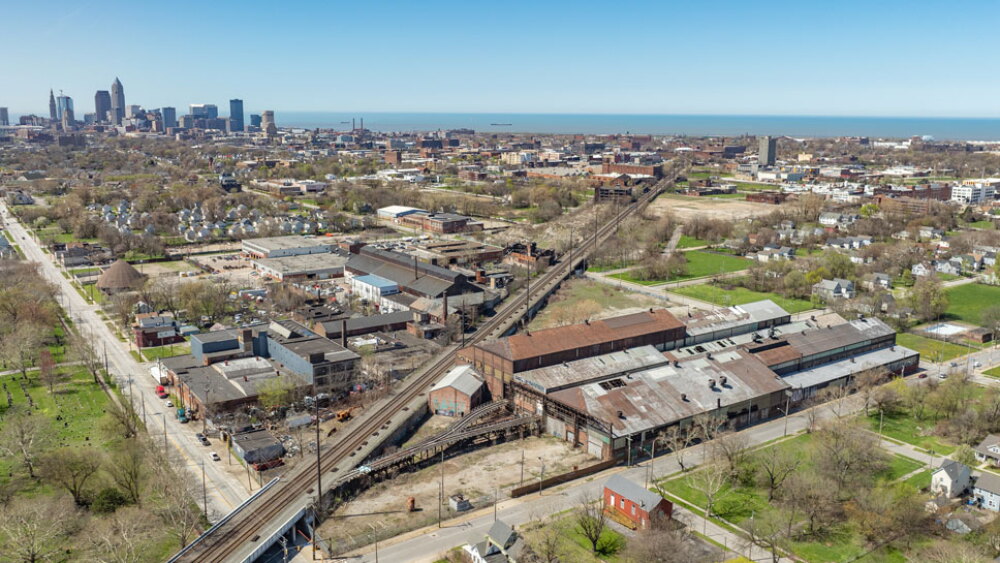
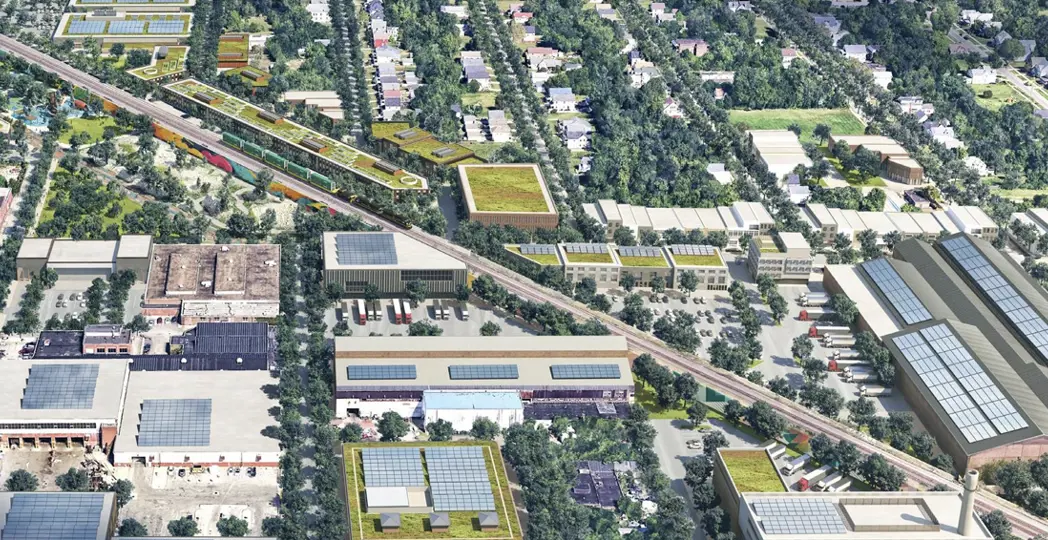
Across the industrial Midwest, thousands of acres of well-located industrial land remain underused, despite their proximity to transit, infrastructure, and workforce. Cleveland’s Midline, a 350-acre (142 ha) redevelopment initiative announced this spring, is testing a new model for bringing those sites back into productive use. As communities compete for advanced manufacturing investment, the project combines public, private, and philanthropic capital to prepare brownfield sites at district scale, rather than parcel by parcel.
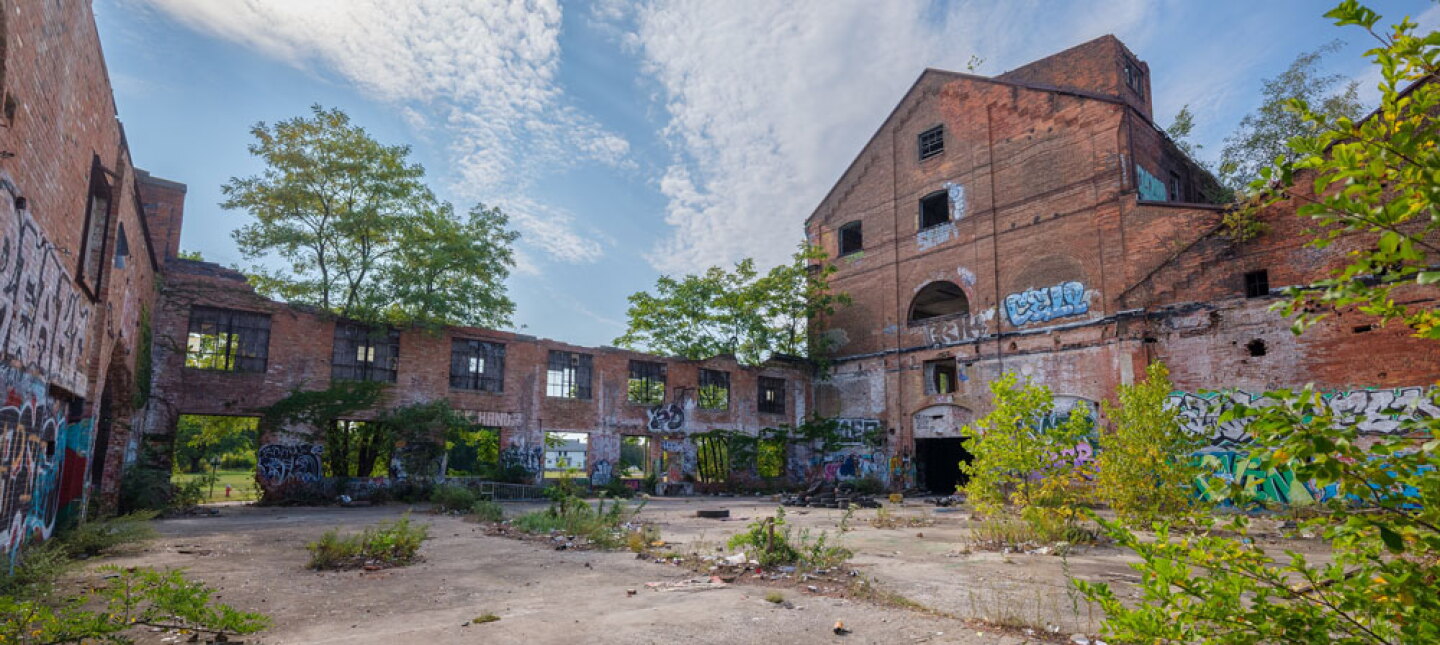
Cuyahoga County, Ohio, illustrates both the challenge and the opportunity facing legacy industrial communities. In Cleveland, the county’s largest city, approximately 11,000 acres (4,450 ha) are zoned for industrial use, including an estimated 3,500–4,000 acres (1,415–1,620 ha) that are considered disinvested industrial brownfields—more than a third of the city’s industrial inventory. Many of these sites remain vacant or underused, despite their proximity to workforce, infrastructure, and transportation assets.
Cleveland’s Midline proposes a bold solution.
Looking Beyond Individual Sites
Announced earlier this spring, The Midline is a redevelopment initiative focused on industrial redevelopment, job creation, public space, and transit accessibility.
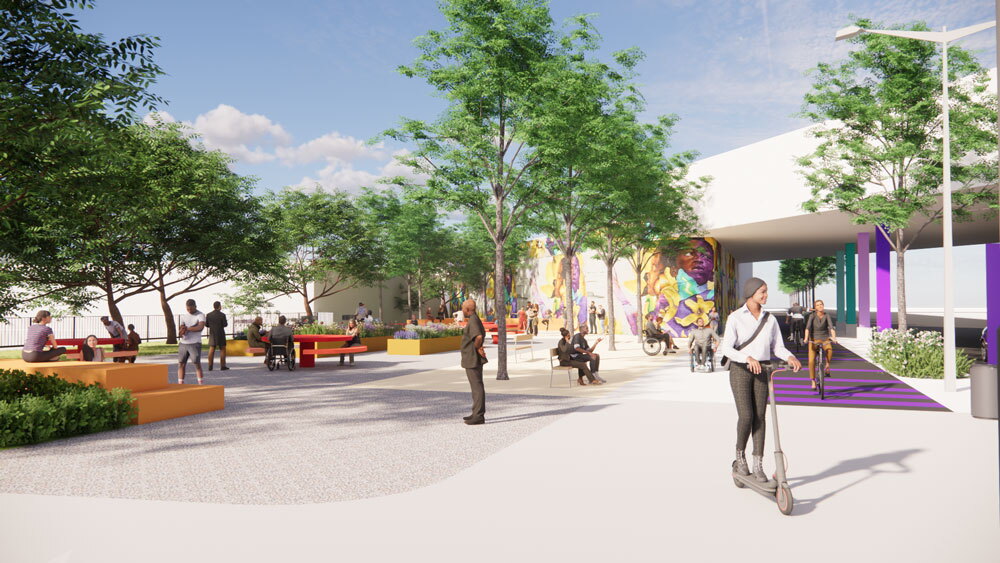
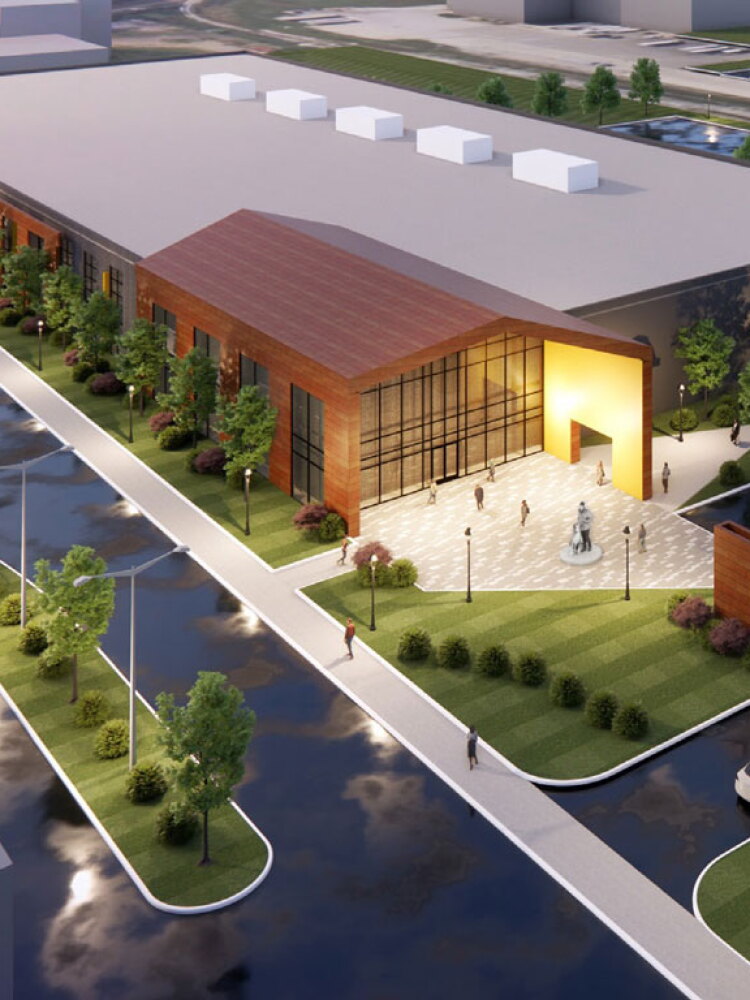
Rather than approaching redevelopment as a collection of individual parcels, the initiative—years in the making—brings together fragmented, underused parcels along the historic Norfolk Southern rail corridor to form a unified district designed for advanced manufacturing, research and development, and related industries. The site sits within reach of bus rapid transit routes, two RTA rail stations, and interstate highways, putting it within a 30-minute commute of nearly 900,000 workers.
This ambitious plan stemmed from the recognition that industrial brownfields rarely face a single obstacle. Instead, environmental remediation, aging infrastructure, fragmented ownership, and jurisdictional boundaries frequently intersect, creating barriers that traditional project-by-project redevelopment approaches fight to overcome. As a result, many communities struggle to move beyond isolated success stories.
The Midline reflects a growing recognition that large-scale industrial redevelopment may require a different model, one capable of coordinating multiple stakeholders from the private, public, and philanthropic worlds to assemble land and align long-term economic development objectives.
The Role of the Site Readiness Fund
Central to Cleveland’s approach is the Site Readiness for Good Jobs Fund (SRF), a nonprofit entity established to help prepare industrial sites for future investment. Unlike a traditional public agency, the SRF operates independently while maintaining a public mission. The city of Cleveland seeded SRF with $50 million from its American Rescue Plan Act allocation; The Cleveland Foundation has led the charge on raising roughly $25 million and counting. This permanent capital lets SRF move quickly when strategic opportunities arise.
SRF’s resources are then leveraged through site-specific funding partnerships with JobsOhio, the Ohio Department of Development, the Northeast Ohio Areawide Coordinating Agency, the federal and state environmental protection organizations, and others.
Unlike a traditional grant program, this model is designed to be self-sustaining. Once a site is completely developed, SRF seeks to recover its original investment, as well as a modest return, allowing those dollars to be recycled into future projects. Depending on the opportunity, that recovery may come through the sale of prepared land, a ground lease, or an equity position in a development that is exited after permanent financing is secured.
The result is a revolving investment model that continually replenishes itself while expanding the inventory of development-ready sites. By taking on the early-stage risks that often prevent redevelopment from occurring, SRF enables the private sector to focus on what it does best: building projects, creating jobs, and investing in Cleveland’s future.
For communities wrestling with large brownfield portfolios, this type of organizational structure offers several advantages. The SRF can pursue grant opportunities unavailable to private developers and can leverage philanthropic investment alongside public funding. Beyond traditional capital sources, the structure allows the SRF to pursue community ownership models of specific properties that would be inaccessible to a public entity. The SRF’s focused mission also makes it a more attractive destination for top talent specialized in environmental remediation and site readiness who might be reluctant to enter the private sector or government. Most importantly, the fund can operate on timelines that recognize industrial redevelopment as a long-term process rather than a short-term transaction. Although these early-stage investments by SRF and its partners may be low, the overall returns to the community are enormous with respect to jobs, wealth, removal of blight, and tax revenues for civic services and education.
The approach reflects an emerging understanding that the unique redevelopment challenges in urban infill locations require equally unique partnerships.
Why Counties Matter
Beyond the SRF, The Midline also highlights the unique role counties can play in industrial redevelopment.
Whereas cities focus on municipal priorities and private developers focus on individual projects, counties are often positioned to view industrial corridors at a regional scale. This broader perspective can unlock opportunities that might otherwise remain invisible.
The Cuyahoga County Planning Commission’s initial vacant industrial land survey process originally identified the parcels that would become The Midline. This same county-wide analysis also uncovered opportunities beyond municipal boundaries. In one case, a 22 acre (9 ha) former industrial site in one municipality was paired with a neighboring 10 acre (4 ha) site in another jurisdiction, creating a 32 acre (13 ha) redevelopment opportunity that would be far more competitive in today’s industrial marketplace than either parcel would be alone. A municipality-only approach would not have been able to create this site.
By viewing industrial land as part of a connected regional system rather than as a collection of isolated parcels, counties can help communities assemble sites that better align with how employers evaluate locations and make investment decisions. Counties can also signal larger economic priorities to state and federal funding partners, which means that funding can be more strategically deployed.
Rethinking Transit-Oriented Development
The county’s involvement also applies to the regional conversation around traditional and emerging approaches to transit-oriented development (TOD).
For decades, many TOD strategies have focused on housing development. Although residential development remains key to TOD strategies, regions are increasingly exploring how employment uses can be better integrated into transit-served locations.
Historically, many industrial employers operated within urban neighborhoods before relocating to suburban greenfield locations. Today—as industrial users place greater value on workforce access, infrastructure connectivity, and proximity to innovation ecosystems—some urban industrial districts are becoming attractive once more.
Rather than simply serving commuters, transit can become a catalyst for job creation, talent attraction, and long-term economic growth. Projects such as The Midline suggest that industrial redevelopment can be—and, in many cases in cities such as Cleveland, needs to be—a key piece of the evolving conversation around TOD
Building a Model That Lasts
Perhaps the most significant lesson from Cleveland is not about physical redevelopment but instead about institutional capacity.
Brownfield redevelopment often depends on one-time funding opportunities, which leaves communities vulnerable when those resources disappear. The challenge is not simply securing capital. It also entails creating systems capable of sustaining investment over decades.
The embrace of a public/private/philanthropic partnership has been key to the strategy’s early success. Entities such as the Ohio Department of Development, JobsOhio, and Ohio Environmental Protection Agency bring planning authority, legitimacy, and long-term accountability. Private-sector partners contribute development expertise and market discipline. Philanthropic organizations such as The Cleveland Foundation, Key Bank, and the Rockefeller Foundation provide patient capital focused on long-term community outcomes rather than immediate returns. Additional project-level support has come from such organizations as the Gund Foundation, the Fund for Our Economic Future, the Nord Family Foundation, the Local Initiatives Support Coalition, the U.S. Dept of Transportation, and the U.S. Economic Development Administration.
Together, those partners can create mechanisms capable of reducing risk, attracting investment, and maintaining momentum through multiple political and economic cycles.
Shifting from Post-Industrial to Pre-Industrial
For decades, cities such as Cleveland have been described as “post-industrial,” a label that suggests manufacturing is part of a completed chapter rather than a continuing story. As The Midline advanced, however, a different perspective emerged: Cleveland is not post-industrial; it is pre-industrial.
The term post-industrial implies finality, as if the city’s industrial legacy exists only in its past. Yet the very assets that made Cleveland an industrial powerhouse remain largely intact: strategic transportation networks, access to labor, established infrastructure, proximity to research institutions, and industrial land located near population centers.
The challenge is not that these assets disappeared. The challenge is that many became disconnected from the needs of the modern economy.
Every city faces its own market realities, political dynamics, and development challenges. No universal formula exists for industrial redevelopment. Yet the questions facing Cleveland are increasingly common nationwide. How can communities assemble and prepare sites at scale? How can they reconnect disinvested industrial corridors to surrounding neighborhoods? How can they position urban land to compete for advanced manufacturing, innovation, and emerging industries?
The Midline does not provide every answer. What it offers is an example of how public, private, and philanthropic partners can work together to move large-scale industrial redevelopment from planning to implementation.
As communities seek to capitalize on reshoring, supply chain resilience, and advanced manufacturing investment, one lesson is becoming increasingly clear: Some of the most important opportunities for future growth may already exist within the urban industrial districts that helped build America’s economy in the first place.
Perhaps the future of industrial development is not found exclusively on greenfield sites at the edge of metropolitan areas but also exists within the legacy industrial districts embedded in the urban cores where American industry began.